Notice NICE ERGO 1
Produit concerné
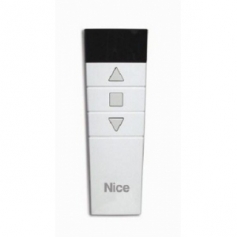
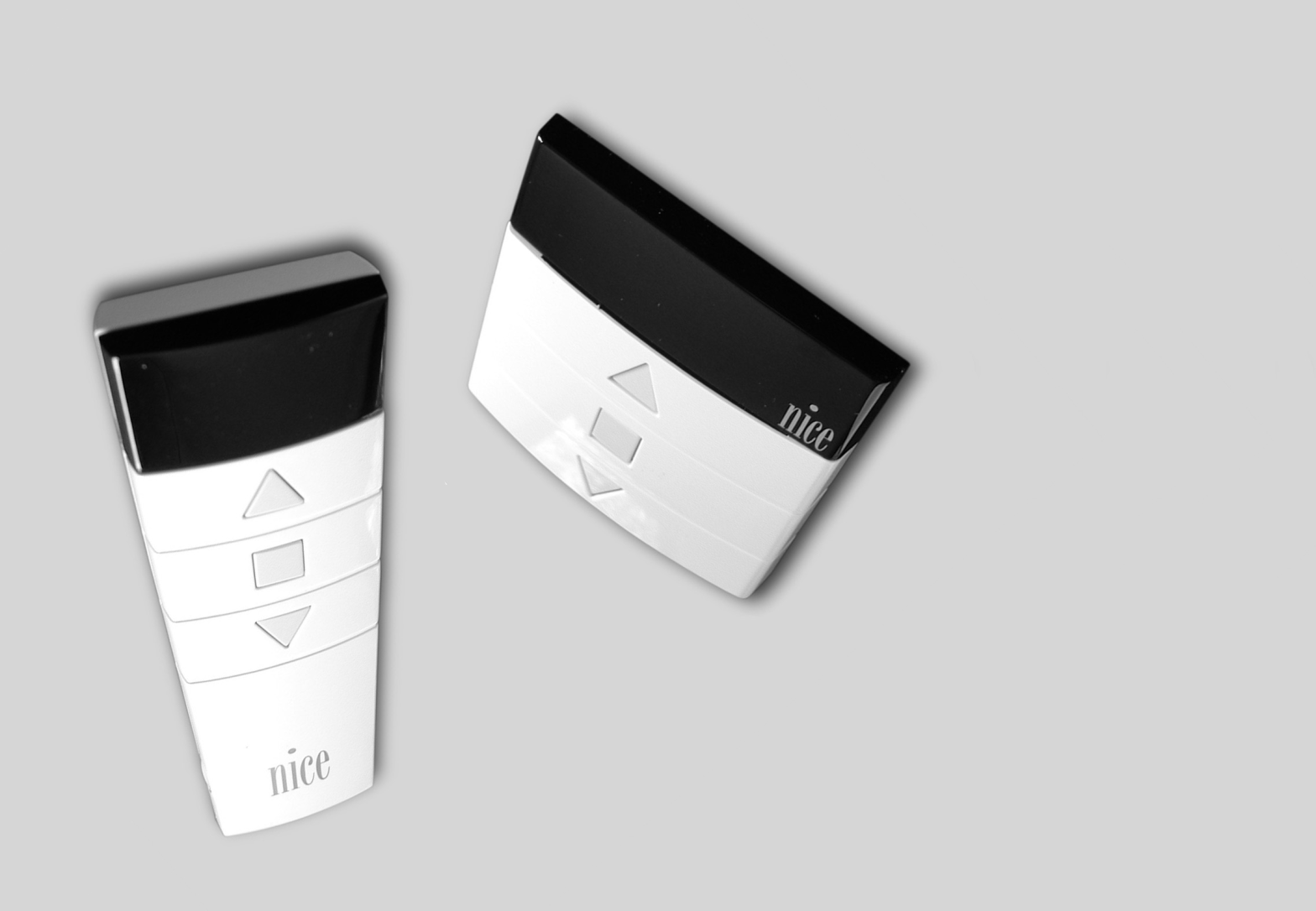
ERGO1 / PLANO1 — remote controls
Instructions and warnings for users — Istruzioni ed avvertenze per l'utilizzatore — Instructions et recommandations pour l'utilisateur — Anweisungen und Hinweise für den Benutzer — Instrucciones y advertencias para el usuario — Instrukcje i ostrzeżenia dla użytkownika
Français
Description
ERGO1 et PLANO1 sont des émetteurs radio qui permettent de commander à distance des moteurs tubulaires série « NEO » avec récepteur radio incorporé et des armoires de commande MINDY série « TT ». Ils utilisent une fréquence de transmission de 433,92 MHz avec une technologie ROLLING CODE qui garantit le maximum de sécurité. Leur portée estimée est de 200 m en espace libre et de 35 m à l'intérieur d'édifices.
Installation de PLANO1
Il est bon d'éviter de placer PLANO1 à proximité de structures métalliques qui pourraient en réduire la portée. Celle-ci peut se réduire également quand la charge des piles diminue, par conséquent, avant de fixer PLANO1, vérifier qu'il y a une bonne marge de portée par rapport aux récepteurs.
Utilisation des émetteurs
- Presser la touche ▲ pour envoyer la commande de Montée.
- Presser la touche ■ pour envoyer la commande d'Arrêt.
- Presser la touche ▼ pour envoyer la commande de Descente.
Mémorisation des émetteurs
Toutes les séquences de mémorisation doivent être exécutées dans les limites de temps prévues. La programmation par radio peut avoir lieu dans tous les récepteurs qui se trouvent dans le rayon de portée de l'émetteur ; il est donc opportun de n'alimenter que celui qui est concerné par l'opération.
Mémorisation du premier émetteur
Si aucun émetteur n'a été enregistré dans la mémoire des récepteurs, on peut procéder à l'enregistrement du premier de la façon suivante :
- Dès que le récepteur est alimenté, on entend 2 longs bips (biiip) *
- Dans les 5 secondes qui suivent, presser et maintenir enfoncée la touche ■ de l'émetteur (pendant environ 3 secondes) — 3 s
- Relâcher la touche ■ quand on entend le premier des 3 bips qui confirment la mémorisation
* Si le récepteur contient déjà des codes, à l'allumage on entend 2 bips brefs (bip) ; dans ce cas, il faudra procéder en suivant les indications données dans le prochain tableau.
Mémorisation d'autres émetteurs
Quand un ou plusieurs émetteurs ont déjà été mémorisés, il est possible d'en activer d'autres en procédant de la façon suivante :
- Maintenir enfoncée la touche ■ du nouvel émetteur jusqu'à ce que l'on entende un bip (au bout d'environ 5 secondes) — 5 s
- Presser lentement 3 fois la touche ■ d'un émetteur déjà activé (ancien) — X3
- Presser encore la touche ■ du nouvel émetteur.
À la fin, 3 bips signaleront que le nouvel émetteur a été mémorisé correctement.
Notes : Si la mémoire est pleine (14 codes), 6 bips indiqueront que l'émetteur ne peut pas être mémorisé.
Contrôle et remplacement de la pile
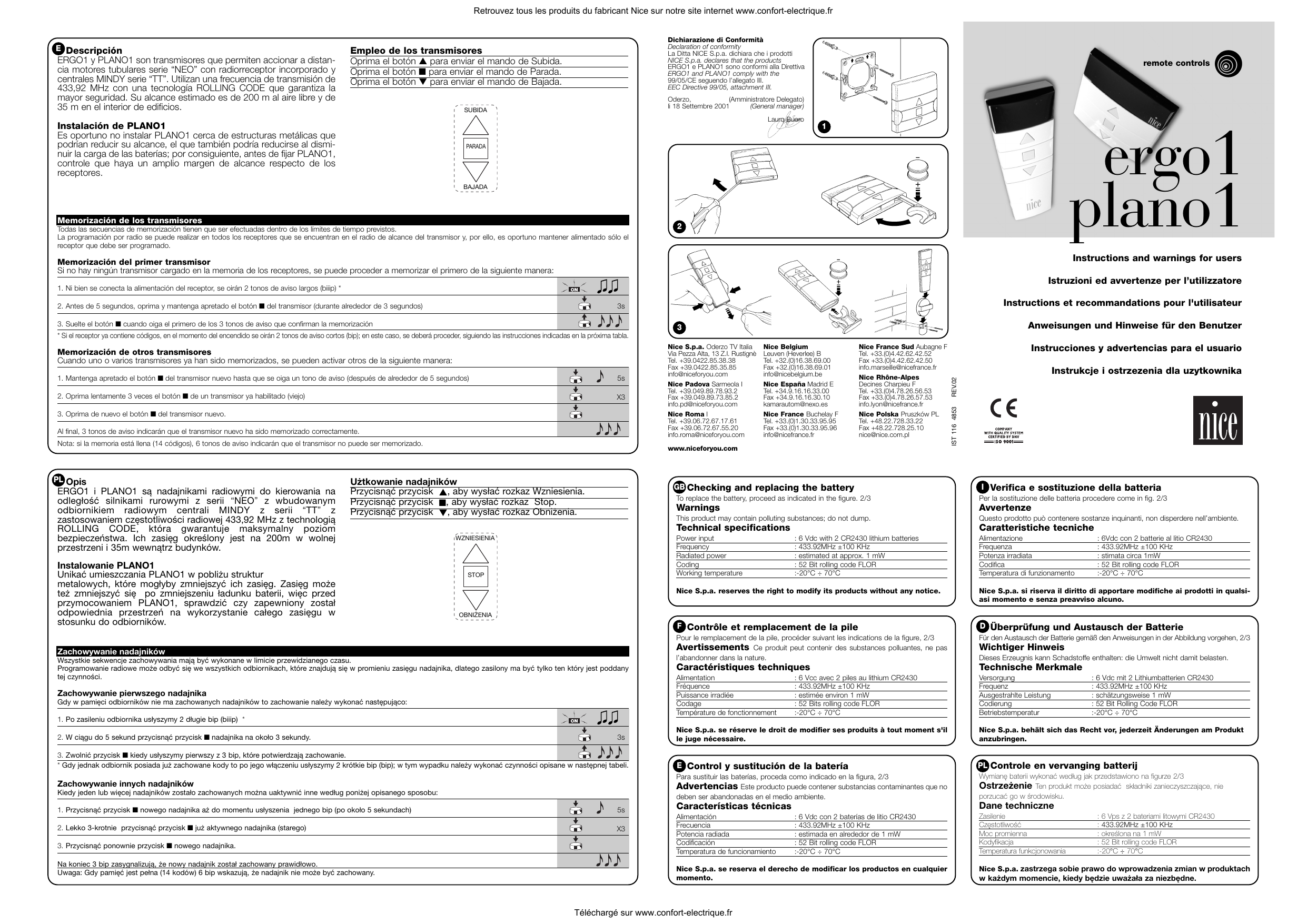
Pour le remplacement de la pile, procéder suivant les indications de la figure 2/3.
Avertissements : Ce produit peut contenir des substances polluantes, ne pas l'abandonner dans la nature.
Caractéristiques techniques
| Alimentation | 6 Vcc avec 2 piles au lithium CR2430 |
|---|---|
| Fréquence | 433.92 MHz ±100 KHz |
| Puissance irradiée | estimée environ 1 mW |
| Codage | 52 Bits rolling code FLOR |
| Température de fonctionnement | -20°C ÷ 70°C |
Nice S.p.a. se réserve le droit de modifier ses produits à tout moment s'il le juge nécessaire.
English
Description
ERGO1 and PLANO1 are radio transmitters for the remote control of the "NEO" series of tubular motors with built-in radio receivers and the "TT" series of MINDY control units. They use a transmission frequency of 433.92 MHz and ROLLING CODE technology to ensure maximum security. Their estimated range is 200 m in the open and 35 m inside buildings.
Installing PLANO1
PLANO1 should not be installed near metal structures, which could reduce its range, together with a reduction in the battery range. Before installing PLANO1, therefore, check the operating range is adequate.
Using the transmitters
- Press button ▲ to send the Up command.
- Press button ■ to send the Stop command.
- Press button ▼ to send the Down command.
Memorising the transmitters
All the memorisation sequences must be completed within the programmed time limits. Programming via radio may be done on all the receivers within the range of the transmitter; only the one involved in the operation should be kept switched on, therefore.
Memorising the first transmitter
If no transmitter has been entered in the memory of the receivers, the first one should be entered as follows:
- As soon as the receiver is powered, 2 long beeps will sound *
- Within 5 seconds press and hold down button ■ of the transmitter (for approx. 3 seconds) — 3 s
- Release button ■ when you hear the first of the 3 beeps confirming memorisation
* If the receiver already contains codes, 2 short beeps will sound when it is switched on; in this case, proceed with the instructions shown in the following table.
Memorising other transmitters
When one or more transmitters have already been memorised, others may be enabled as follows:
- Press and hold down button ■ of the new transmitter until you hear a beep (after about 5 seconds) — 5 s
- Press button ■ of a previously enabled transmitter slowly three times (old) — X3
- Press button ■ of the new transmitter again.
At the end, 3 beeps will indicate that the new transmitter has been memorised correctly.
N.B.: If the memory is full (14 codes), 6 beeps will indicate that the transmitter can no longer be memorised.
Checking and replacing the battery
To replace the battery, proceed as indicated in the figure 2/3.
Warnings: This product may contain polluting substances; do not dump.
Technical specifications
| Power input | 6 Vdc with 2 CR2430 lithium batteries |
|---|---|
| Frequency | 433.92 MHz ±100 KHz |
| Radiated power | estimated at approx. 1 mW |
| Coding | 52 Bit rolling code FLOR |
| Working temperature | -20°C ÷ 70°C |
Nice S.p.a. reserves the right to modify its products without any notice.
Italiano
Descrizione
ERGO1 e PLANO1 sono dei trasmettitori radio che permettono di comandare a distanza i motori tubolari serie "NEO" con ricevitore radio incorporato e centrali MINDY serie "TT". Utilizzano una frequenza di trasmissione di 433.92 MHz che garantisce la massima sicurezza con tecnologia ROLLING CODE. La loro portata è stimata di 200 m in spazio libero e di 35 m all'interno di edifici.
Installazione di PLANO1
È opportuno evitare di collocare PLANO1 in prossimità di strutture metalliche che potrebbero ridurne la portata. La stessa, può ridursi anche con la diminuzione di carica delle batterie, quindi, prima di fissare PLANO1, verificare che vi sia un ampio margine di portata nei confronti dei ricevitori.
Utilizzo dei trasmettitori
- Premere il tasto ▲ per inviare il comando di Salita.
- Premere il tasto ■ per inviare il comando di Stop.
- Premere il tasto ▼ per inviare il comando di Discesa.
Memorizzazione dei trasmettitori
Tutte le sequenze di memorizzazione devono essere eseguite entro i limiti di tempo previsti. La programmazione via radio può avvenire in tutti i ricevitori che si trovano nel raggio della portata del trasmettitore; è quindi opportuno tenere alimentato solo quello interessato all'operazione.
Memorizzazione del primo trasmettitore
Se nessun trasmettitore è già inserito nella memoria dei ricevitori, si può procedere all'inserimento del primo con la seguente modalità :
- Appena data alimentazione al ricevitore, si sentiranno 2 bip lunghi (biiip) *
- Entro 5 secondi premere e tener premuto il tasto ■ del trasmettitore (per circa 3 secondi) — 3 s
- Rilasciare il tasto ■ quando si sentirà il primo dei 3 bip che confermano la memorizzazione
* Se il ricevitore contiene già dei codici, all'accensione si udiranno 2 bip brevi (bip); in questo caso si dovrà procedere seguendo le istruzioni riportate nella prossima tabella.
Memorizzazione di altri trasmettitori
Quando uno o più trasmettitori sono già stati memorizzati, è possibile abilitare altri in questo modo :
- Tenere premuto il tasto ■ del nuovo trasmettitore fino a sentire un bip (dopo circa 5 secondi) — 5 s
- Lentamente premere per 3 volte il tasto ■ di un trasmettitore già abilitato (vecchio) — X3
- Premere ancora il tasto ■ del nuovo trasmettitore.
Alla fine 3 bip segnaleranno che il nuovo trasmettitore è stato memorizzato correttamente.
Nota: Se la memoria è piena (14 codici), 6 bip indicheranno che il trasmettitore non può essere memorizzato.
Verifica e sostituzione della batteria
Per la sostituzione delle batteria procedere come in fig. 2/3.
Avvertenze: Questo prodotto può contenere sostanze inquinanti, non disperdere nell'ambiente.
Caratteristiche tecniche
| Alimentazione | 6 Vdc con 2 batterie al litio CR2430 |
|---|---|
| Frequenza | 433.92 MHz ±100 KHz |
| Potenza irradiata | stimata circa 1 mW |
| Codifica | 52 Bit rolling code FLOR |
| Temperatura di funzionamento | -20°C ÷ 70°C |
Nice S.p.a. si riserva il diritto di apportare modifiche ai prodotti in qualsiasi momento e senza preavviso alcuno.
Deutsch
Beschreibung
ERGO1 und PLANO1 sind Funksender, mit denen Rohrmotoren der Serie "NEO" mit integriertem Funkempfänger und Steuerungen MINDY Serie "TT" ferngesteuert werden können. Sie verwenden eine Übertragungsfrequenz von 433,92 MHz mit Rolling-Code Technologie, die maximale Sicherheit gewährleistet. Ihre Reichweite wird auf 200 m auf freiem Felde und 35 m in Gebäuden geschätzt.
Installation von PLANO1
PLANO1 sollte nicht in der Nähe von Metallstrukturen angeordnet werden, da sie seine Reichweite reduzieren könnten. Die Reichweite kann sich auch reduzieren, wenn die Batterien leer werden, daher vor der Befestigung von PLANO1 überprüfen, dass die Reichweite zu den Empfängern einen ausreichenden Überschuss hat.
Verwendung der Sender
- Auf Taste ▲ drücken, um den Befehl Auf zu senden.
- Auf Taste ■ drücken, um den Befehl Stopp zu senden.
- Auf Taste ▼ drücken, um den Befehl Ab zu senden.
Speicherung der Sender
Alle Speichersequenzen müssen in den vorgesehenen Zeitgrenzen ausgeführt werden. Die Programmierung per Funk kann an allen Empfängern erfolgen, die sich innerhalb der Reichweite des Senders befinden, daher sollte nur der betreffende Empfänger gespeist sein.
Speicherung des ersten Senders
Ist kein Sender im Empfänger gespeichert, so kann der erste wie folgt eingegeben werden :
- Sobald der Empfänger mit Spannung versorgt ist, wird man 2 lange Bieptöne (biiip) hören *
- Innerhalb von 5 Sekunden auf Taste ■ des Senders drücken und diese gedrückt halten (ca. 3 Sekunden lang) — 3 s
- Die Taste ■ loslassen, wenn man den ersten der Bieptöne hört, welche die Speicherung bestätigen
* Enthält der Empfänger bereits Codes, wird man beim Einschalten 2 kurze Bieptöne (bip) hören; in diesem Fall muss man nach den Anweisungen in der nächsten Tabelle verfahren.
Speicherung anderer Sender
Wenn ein oder mehrere Sender bereits gespeichert sind, können andere wie folgt aktiviert werden :
- Auf Taste ■ des neuen Senders drücken, bis man einen Biepton hört (nach ca. 5 Sekunden) — 5 s
- Langsam drei Mal auf Taste ■ eines bereits aktivierten Senders (alt) drücken — X3
- Nochmals auf Taste ■ des neuen Senders drücken.
Am Ende werden 3 Bieptöne melden, dass der neue Sender korrekt gespeichert worden ist.
Anmerkung: Ist der Speicher voll (14 Codes), werden 6 Bieptöne melden, dass der Sender nicht gespeichert werden kann.
Überprüfung und Austausch der Batterie
Für den Austausch der Batterie gemäß den Anweisungen in der Abbildung vorgehen, 2/3.
Wichtiger Hinweis: Dieses Erzeugnis kann Schadstoffe enthalten: die Umwelt nicht damit belasten.
Technische Merkmale
| Versorgung | 6 Vdc mit 2 Lithiumbatterien CR2430 |
|---|---|
| Frequenz | 433.92 MHz ±100 KHz |
| Ausgestrahlte Leistung | schätzungsweise 1 mW |
| Codierung | 52 Bit Rolling Code FLOR |
| Betriebstemperatur | -20°C ÷ 70°C |
Nice S.p.a. behält sich das Recht vor, jederzeit Änderungen am Produkt anzubringen.
Español
Descripción
ERGO1 y PLANO1 son transmisores que permiten accionar a distancia motores tubulares serie "NEO" con radiorreceptor incorporado y centrales MINDY serie "TT". Utilizan una frecuencia de transmisión de 433,92 MHz con una tecnología ROLLING CODE que garantiza la mayor seguridad. Su alcance estimado es de 200 m al aire libre y 35 m en el interior de edificios.
Instalación de PLANO1
Es oportuno no instalar PLANO1 cerca de estructuras metálicas que podrían reducir su alcance, el que también podría reducirse al disminuir la carga de las baterías; por consiguiente, antes de fijar PLANO1, controle que haya un amplio margen de alcance respecto de los receptores.
Empleo de los transmisores
- Oprima el botón ▲ para enviar el mando de Subida.
- Oprima el botón ■ para enviar el mando de Parada.
- Oprima el botón ▼ para enviar el mando de Bajada.
Memorización de los transmisores
Todas las secuencias de memorización tienen que ser efectuadas dentro de los límites de tiempo previstos. La programación por radio se puede realizar en todos los receptores que se encuentran en el radio de alcance del transmisor y, por ello, es oportuno mantener alimentado sólo el receptor que debe ser programado.
Memorización del primer transmisor
Si no hay ningún transmisor cargado en la memoria de los receptores, se puede proceder a memorizar el primero de la siguiente manera :
- Ni bien se conecta la alimentación del receptor, se oirán 2 tonos de aviso largos (biiip) *
- Antes de 5 segundos, oprima y mantenga apretado el botón ■ del transmisor (durante alrededor de 3 segundos) — 3 s
- Suelte el botón ■ cuando oiga el primero de los 3 tonos de aviso que confirman la memorización
* Si el receptor ya contiene códigos, en el momento del encendido se oirán 2 tonos de aviso breves (bip); en este caso, se deberá proceder, siguiendo las instrucciones indicadas en la próxima tabla.
Memorización de otros transmisores
Cuando uno o varios transmisores ya han sido memorizados, se pueden activar otros de la siguiente manera :
- Mantenga apretado el botón ■ del transmisor nuevo hasta que se oiga un tono de aviso (después de alrededor de 5 segundos) — 5 s
- Oprima lentamente 3 veces el botón ■ de un transmisor ya habilitado (viejo) — X3
- Oprima de nuevo el botón ■ del transmisor nuevo.
Al final, 3 tonos de aviso indicarán que el transmisor nuevo ha sido memorizado correctamente.
Nota: Si la memoria está llena (14 códigos), 6 tonos de aviso indicarán que el transmisor no puede ser memorizado.
Control y sustitución de la batería
Para sustituir las baterías, proceda como indicado en la figura, 2/3.
Advertencias: Este producto puede contener substancias contaminantes que no deben ser abandonadas en el medio ambiente.
Características técnicas
| Alimentación | 6 Vdc con 2 baterías de litio CR2430 |
|---|---|
| Frecuencia | 433.92 MHz ±100 KHz |
| Potencia radiada | estimada en alrededor de 1 mW |
| Codificación | 52 Bit rolling code FLOR |
| Temperatura de funcionamiento | -20°C ÷ 70°C |
Nice S.p.a. se reserva el derecho de modificar los productos en cualquier momento.
Polski
Opis
ERGO1 i PLANO1 są nadajnikami radiowymi do kierowania na odległość silnikami rurowymi z serii "NEO" z wbudowanym odbiornikiem radiowym i centrali MINDY serii "TT" z zastosowaniem częstotliwości radiowej 433,92 MHz z technologią ROLLING CODE, która gwarantuje maksymalny poziom bezpieczeństwa. Ich zasięg określony jest na 200 m w wolnej przestrzeni i 35 m wewnątrz budynków.
Instalowanie PLANO1
Unikać umieszczania PLANO1 w pobliżu struktur metalowych, które mogłyby zmniejszyć jego zasięg. Zasięg może też zmniejszyć się po zmniejszeniu ładunku baterii, więc przed przymocowaniem PLANO1, sprawdzić czy zapewniony został odpowiednio przestrzeń na wykorzystanie całego zasięgu w stosunku do odbiorników.
Użytkowanie nadajników
- Przycisnąć przycisk ▲, aby wysłać rozkaz Wzniesienia.
- Przycisnąć przycisk ■, aby wysłać rozkaz Stop.
- Przycisnąć przycisk ▼, aby wysłać rozkaz Obniżenia.
Zachowywanie nadajników
Wszystkie sekwencje zachowywania mają być wykonane w limicie przewidzianego czasu. Programowanie radiowe może odbyć się we wszystkich odbiornikach, które znajdują się w promieniu zasięgu nadajnika, dlatego zasilony ma być tylko ten który jest poddany tej czynności.
Zachowywanie pierwszego nadajnika
Gdy w pamięci odbiorników nie ma zachowanych nadajników to zachowanie należy wykonać następująco :
- Po zasileniu odbiornika usłyszemy 2 długie bipi (biiip) *
- W ciągu do 5 sekund przycisnąć przycisk ■ nadajnika na około 3 sekundy — 3 s
- Zwolnić przycisk ■ kiedy usłyszymy pierwszy z 3 bip, które potwierdzają zachowanie.
* Gdy pamięć odbiornik posiada już zachowane kody to po jego włączeniu usłyszymy 2 krótkie bip (bip); w tym wypadku należy wykonać czynności opisane w następnej tabeli.
Zachowywanie innych nadajników
Kiedy jeden lub więcej nadajników zostało zachowanych można uaktywnić inne według poniżej opisanego sposobu :
- Przycisnąć przycisk ■ nowego nadajnika aż do momentu usłyszenia jednego bip (po około 5 sekundach) — 5 s
- Lekko 3-krotnie przycisnąć przycisk ■ już aktywnego nadajnika (starego) — X3
- Przycisnąć ponownie przycisk ■ nowego nadajnika.
Na koniec 3 bip zasygnalizują, że nowy nadajnik został zachowany prawidłowo.
Uwaga: Gdy pamięć jest pełna (14 kodów) 6 bip wskazują, że nadajnik nie może być zachowany.
Kontrola i wymiana baterii
Wymianę baterii wykonać według jak przedstawiono na figurze 2/3.
Ostrzeżenie: Ten produkt może posiadać składniki zanieczyszczające, nie porzucać go w środowisku.
Dane techniczne
| Zasilenie | 6 Vps z 2 bateriami litowymi CR2430 |
|---|---|
| Częstotliwość | 433.92 MHz ±100 KHz |
| Moc promienna | określona na 1 mW |
| Kodyfikacja | 52 Bit rolling code FLOR |
| Temperatura funkcjonowania | -20°C ÷ 70°C |
Nice S.p.a. zastrzega sobie prawo do wprowadzenia zmian w produktach w każdym momencie, kiedy będzie uważała za niezbędne.
Dichiarazione di Conformità / Declaration of conformity
La Ditta NICE S.p.a. dichiara che i prodotti ERGO1 e PLANO1 sono conformi alla Direttiva 99/05/CE seguendo l'allegato III.
NICE S.p.a. declares that the products ERGO1 and PLANO1 comply with the EEC Directive 99/05, attachment III.
Oderzo, li 18 Settembre 2001 — Lauro Buoro (Amministratore Delegato / General manager)